Back
HOLYFANS
Fleeting digital intimacy becomes a slow, tactile archive of queer desire, sexuality and visibility.
Cyanotype / Photography / Installation
2026

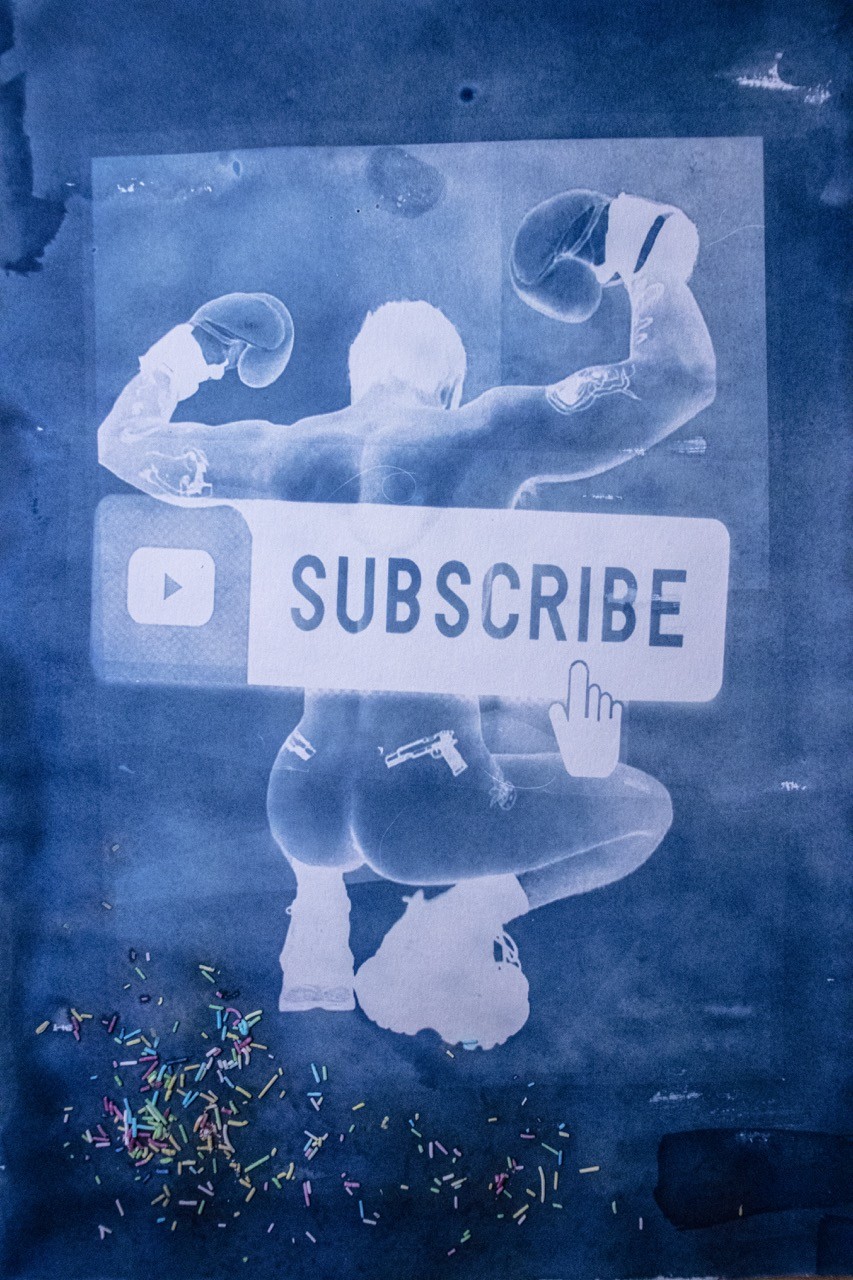
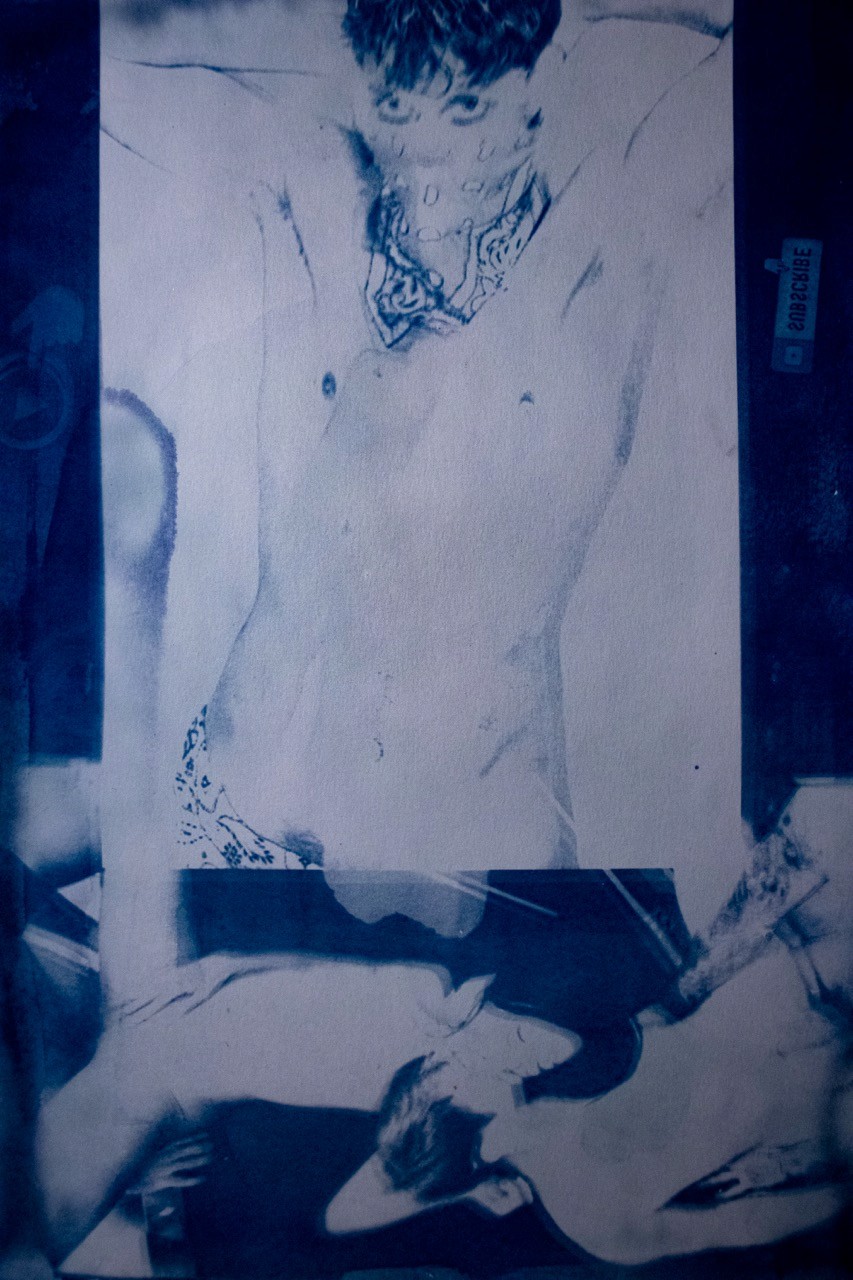
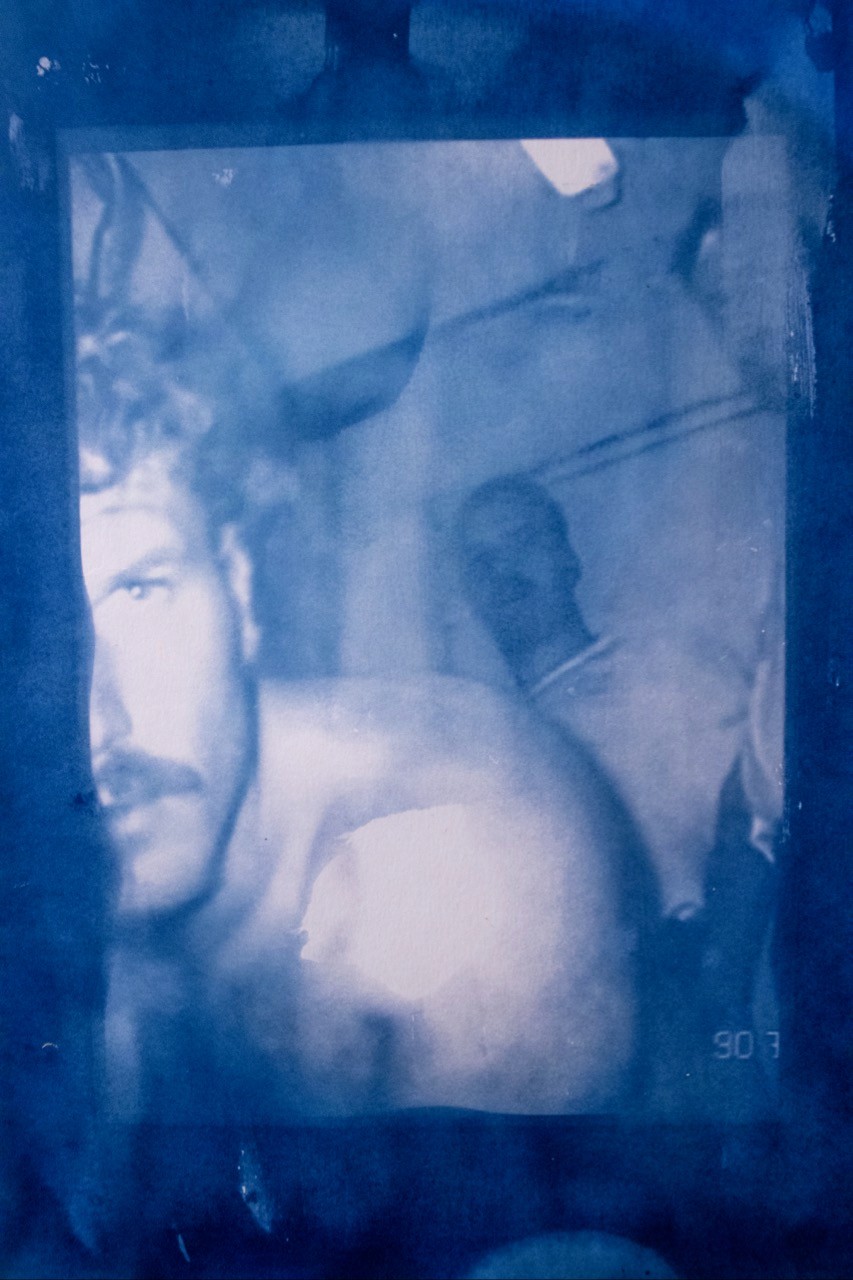
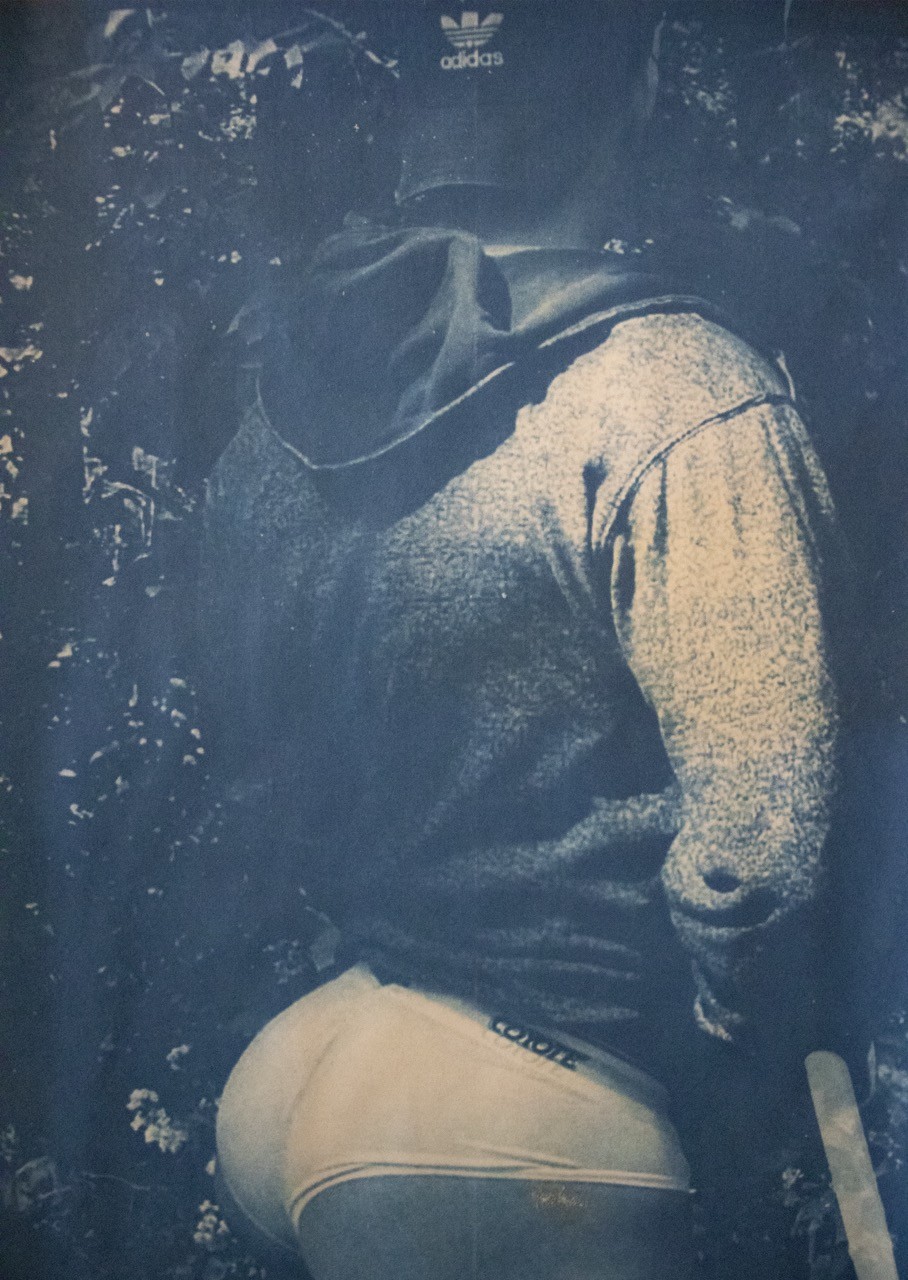
HOLYFANS / From Babylon to OnlyFans is a photographic installation consisting of eight cyanotypes, created using one of the earliest photographic printing processes. Drawing from digital imagery, personal archives, and ephemeral online photographs intended to disappear after a single viewing, Adam Engler translates fleeting digital encounters into permanent physical objects. Through cyanotype, the project confronts the speed, disposability, and immateriality of digital images with the slowness, tactility, and contemplative quality of an historical photographic process.
At the centre of the work is sexuality as one of humanity’s oldest forms of exchange and commodification. Rather than presenting a historical narrative, the subtitle From Babylon to OnlyFans proposes a symbolic trajectory—from the sacred and ritualistic dimensions of sexuality in pre-Christian cultures, through periods of moral regulation and taboo, to its contemporary digital and capitalist manifestations. The work reflects on how the meanings of intimacy, desire, and the body have continuously shifted under changing social, religious, and economic conditions.
Within this framework, platforms such as OnlyFans and pornography are approached not solely as commercial products but also as spaces of self-representation, authenticity, agency, and visibility. Engler deliberately complicates dominant moral narratives by acknowledging the coexistence of commodification and empowerment within contemporary digital intimacy. By transferring these digital images into cyanotype, he creates a paradox: images originally produced for rapid consumption become slow, material, and contemplative artefacts. The process simultaneously desacralises and re-sacralises erotic imagery, inviting viewers to reconsider the relationship between technology, memory, and desire.
The selection of models—including gay couples, cisgender heterosexual and bisexual couples, and transgender individuals—emphasises the plurality of contemporary sexuality and embodied experience. Rather than reinforcing fixed categories of identity, the work presents sexuality as fluid, relational, and resistant to binary definitions.
Presented within the context of the exhibition Cruising Spots, the project also reflects on the transformation of queer intimacy from physical cruising sites to contemporary digital environments. The work preserves traces of encounters that are normally designed to disappear, turning temporary interactions into enduring visual records. In earlier installations, objects associated with queer cruising culture—such as empty poppers bottles—further situated the photographs within a broader cultural and historical context, linking digital intimacy to longstanding forms of queer sociality and desire.
By bringing together historical photographic technology and contemporary digital culture, HOLYFANS / From Babylon to OnlyFans creates a space for reflection on the changing relationship between the body, intimacy, visibility, and the sacred. It asks how sexuality can simultaneously function as a deeply personal form of self-expression and as a commodified product within today’s digital economy, while preserving the complexity and plurality of queer lived experience.
Video invitation to the exhibition can be seen here.